
Are Low Lubricant Fill Weights Caused by the Filler or Check Scale?
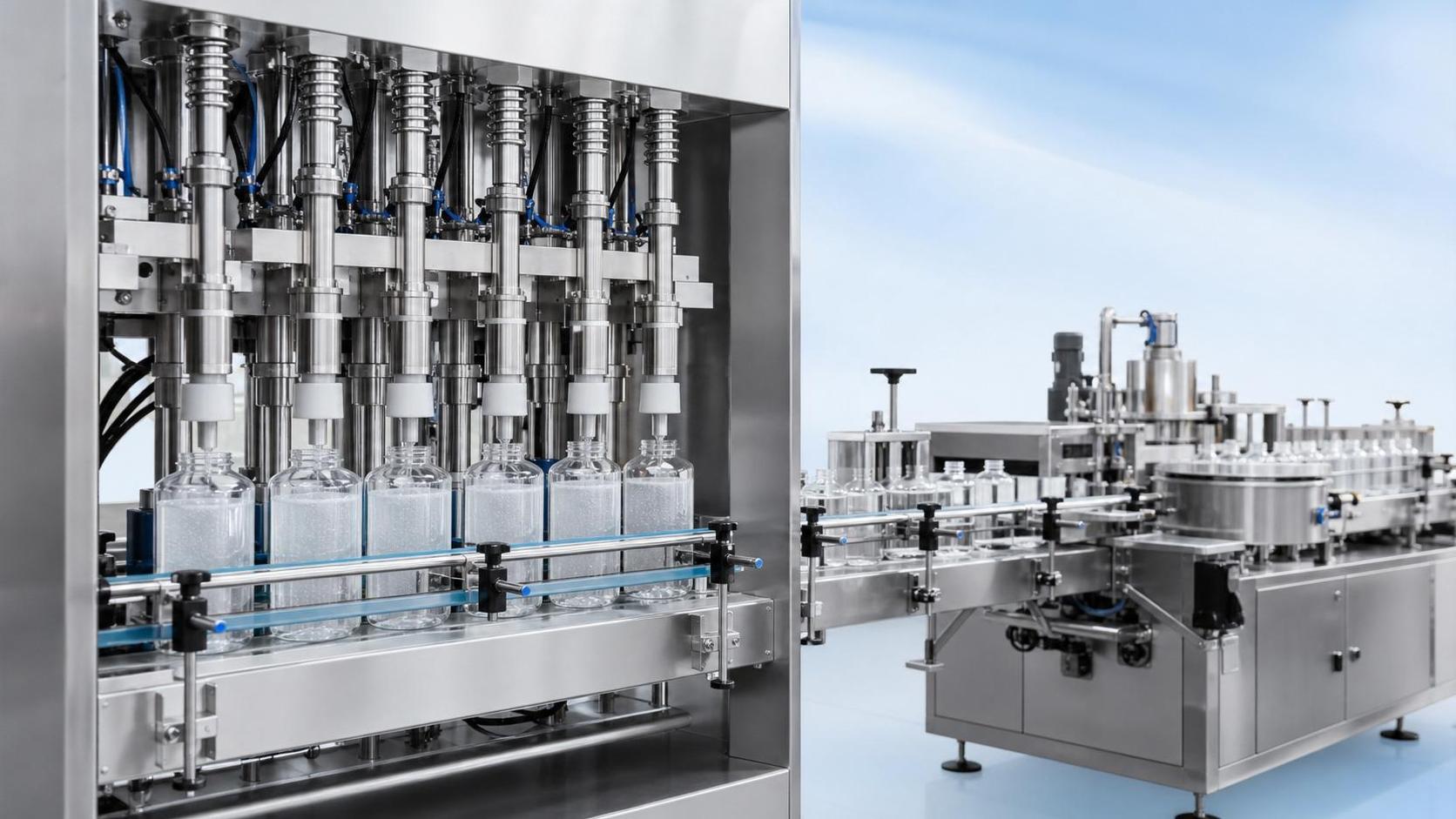
Low lubricant fill weights should not be blamed on the filling machine until the same containers have been checked on a verified reference scale. The decisive distinction is between actual product mass and the checkweigher’s reported result. A filler adjustment is justified only when independent measurements confirm that the product mass is low—not merely because the line is rejecting bottles.
The most reliable diagnosis combines paired weight measurements, correct container tare, and a controlled check at normal conveyor speed. This separates genuine underfilling from weighing error, incorrect product settings, and product loss between filling and inspection. Increasing the fill setting before making that distinction can turn a measurement problem into persistent, costly overfill.
Establish what “low” actually means
A checkweigher may measure gross package weight while displaying a calculated net weight. It may also classify packages against a programmed limit that differs from the filler’s target. Before testing either machine, confirm:
- Whether the declared quantity is mass or volume.
- Whether the displayed weight is gross or calculated net.
- Which tare value and package components the recipe includes.
- Whether “low” means below the production target, below a reject threshold, or below an applicable acceptance limit.
These distinctions change the diagnosis. A bottle below an internal production target is not automatically noncompliant. Equally, a batch average above the declared quantity does not necessarily establish compliance with individual-package requirements. Applicable quantity-control rules depend on the destination market and package declaration.
For a volume-declared lubricant, mass is a proxy for volume only when the conversion uses an appropriate product density and temperature basis. A mass-based check cannot establish volume compliance using an unrelated nominal density.
Verify the reference before judging the line
Use a reference scale with suitable capacity, resolution, and measurement uncertainty for the package and the size of the suspected shortage. A display showing many decimal places does not by itself establish accuracy. If the suspected difference is close to the uncertainty of the reference measurement, the test cannot confidently identify which system is wrong.
Place the scale on a stable, level surface away from conveyor vibration, drafts, and contact with surrounding equipment. Follow its warm-up and verification requirements. Check zero and verify performance with suitable traceable test weights near the operating load; a zero check alone does not establish accuracy at filled-bottle weight.
Repeatedly weigh an unchanged package to assess short-term repeatability. Repositioning it on the platform can also reveal sensitivity to placement. If the reference result itself is unstable, resolve that problem before using it to assess the checkweigher.
Comparisons must use identical package conditions. A capped, labeled bottle cannot be compared directly with an earlier measurement of an uncapped bottle unless those component masses are accounted for. Wipe external lubricant from test containers, check for leaks, and preserve identification throughout the test.
Compare the same bottles, not two unrelated samples
Collect identifiable bottles across consecutive filling cycles and, where possible, across every filling head. Include accepted and rejected bottles. Sampling only rejects can reveal false rejection, but it cannot describe the performance of the whole filling process.
For each bottle, record the checkweigher result, reference gross weight, production time, filling-head identity if available, product temperature, line speed, and reject decision. Use enough observations to cover the suspected pattern. A few bottles may expose a large offset, but they cannot establish process capability or capture an intermittent fault.
Compare checkweigher gross weight with reference gross weight before introducing tare calculations. If the machine only displays calculated net weight, obtain the underlying gross result or reconstruct it using the programmed tare, provided the system’s calculation is understood.
For every paired reading, calculate:
Measurement difference = checkweigher gross weight − reference gross weight
A consistently negative difference indicates that the checkweigher is reading low relative to the reference. Differences that scatter around zero indicate a repeatability issue rather than a simple fixed offset. If gross measurements agree but the displayed net weight is low, investigate the tare calculation and product recipe.
For illustration, a package weighing 950 g on the reference scale and 942 g on the checkweigher has an 8 g measurement discrepancy. That comparison alone does not establish the amount of lubricant inside; it establishes that the two gross measurements disagree.
Determine actual net content with matched tare
The strongest practical check uses the individual empty container’s tare:
Actual net mass = filled package mass − matched empty-package mass
For a controlled trial, identify and weigh empty containers before filling, then account for any caps, seals, labels, or other components added before the final weighing. Keep the tare and filled measurements on the same package basis.
An average tare is less conclusive when the suspected shortage is similar to container-weight variation. A lighter-than-average bottle can contain the correct lubricant mass but appear underweight under a fixed-tare calculation. A heavier bottle can conceal a genuine shortage.
Weighing a container after emptying is another option, but residual lubricant can bias the tare upward and calculated net content downward. That method needs a controlled procedure for residue removal and package conditioning; it is not automatically equivalent to weighing the clean package before filling.
Use the measurement pattern to locate the fault
More than one fault can exist. The filler may genuinely underdeliver while the checkweigher also reads low. Paired measurements quantify the weighing discrepancy; matched-tare measurements establish whether a product shortage remains after that discrepancy is considered.
When the checkweigher is responsible
A dynamic checkweigher must estimate package weight during a limited weighing window. Passing a stationary test does not prove that it performs correctly at production speed. Dynamic verification must use representative packages, spacing, and operating conditions.
Pass the same stable, nonleaking test package through the machine repeatedly under an authorized test procedure. Keep its reference weight known and prevent test packs from entering saleable output. Do not bypass guarding or reach into moving equipment; mechanical inspection and adjustment require the appropriate isolation procedures.
If the reported weight changes with speed or spacing while reference weight remains constant, investigate the weighing installation before changing the filler. Relevant causes include:
- Insufficient weighing time: package length, conveyor speed, and weighing-belt length leave too little usable signal.
- External contact: guides, adjacent bottles, cables, or transfer components impose forces on the package or weighing assembly.
- Mechanical disturbance: belt tracking, buildup, damaged transfers, floor vibration, or nearby machinery disturb the measurement.
- Unstable transfer: bottle rocking and product movement continue during the weighing window.
- Incorrect settings: product selection, filtering, trigger timing, units, limits, or dynamic compensation do not match the application.
Where authorized, a controlled reduced-speed trial can help isolate a dynamic limitation. If results improve, that is evidence to investigate the weighing window and handling conditions—not proof that reduced speed is the permanent solution.
Separate measurement accuracy from reject accuracy as well. If the stored weights are correct but acceptable bottles are physically rejected, check reject timing and package tracking. The reject station may be acting on the wrong bottle.
Do not use a calibration offset to hide unstable results. An offset can address a demonstrated systematic bias under the manufacturer’s procedure; it cannot repair poor repeatability or changing external forces.
When the lubricant really is underweight
Once independent measurements confirm low net content, establish where the mass is lost. Compare controlled measurements immediately after filling with measurements after conveying, capping, and inspection, accounting for added components. Leakage, splash-out, and product deposited on equipment can create low final weights even when the original dose was correct.
If the shortage originates at filling, the mechanism depends on how the machine meters lubricant.
Volumetric delivery needs a valid density basis
A volumetric filler controls a volume, while a scale measures mass. The relationship is:
Product mass = delivered liquid volume × density at filling temperature
If lubricant density decreases as temperature rises, an unchanged delivered volume produces less mass. This does not, by itself, prove that a volume-declared package is short: the required volume and its applicable reference-temperature basis still matter.
Use density information appropriate to the lubricant grade, batch, and temperature. Do not apply a universal correction factor across different products.
Viscosity creates a separate effect. Changes in temperature or grade can alter suction filling, valve response, pressure loss, piston replenishment, and nozzle cutoff. A programmed volume therefore needs verification under actual operating conditions. Air entrainment can also reduce the liquid mass delivered by a system that meters an aerated mixture.
Time-based and weight-based systems fail differently
With time-pressure filling, an unchanged valve-open time does not guarantee unchanged delivery. Product pressure, viscosity, restrictions, and nozzle condition affect flow. Check supply pressure during the fill cycle rather than relying only on a steady idle reading.
With net-weight filling, inspect the filler’s own weighing process: empty-container tare, load-cell verification, external contact, coarse-to-fine transitions, cutoff timing, and compensation for product still falling after valve closure. A filler’s displayed “net weight” is not an independent reference if it depends on its own sensor and calculation.
Head-by-head results help prioritize work. A persistent low result from one head points toward a localized valve, seal, nozzle, metering, or supply problem. A shift across all heads directs attention toward shared conditions such as temperature, supply pressure, product changeover, or recipe selection. These patterns guide investigation but do not replace component checks.
Confirm the correction without creating overfill
Record the existing settings before changing them, then change one relevant variable at a time. After correction, repeat paired gross measurements and matched-tare net checks at intended production speed. Confirm both average performance and variation: a satisfactory average can still conceal low bottles or a failing filling head.
If automatic checkweigher feedback adjusts the filler, review it under a controlled procedure. A low-biased checkweigher can drive the filler toward overfill, while an incorrectly configured tare can produce the same response. Feedback should resume only after the measurement basis and control behavior are verified.
Contain potentially affected production according to the quality procedure, and assess the relevant production interval using verified measurements. The practical decision rule is straightforward: correct the weighing system when reported weight is wrong; correct delivery or downstream handling when actual net content is wrong. Raise the fill target only when reliable net-content evidence supports that change.
Thank you very much for writing to us. Please leave your message and contact information, we will reply to you within 24 hours.