
Can Shandong Tuodao Customize a Lubricating Oil Filler?
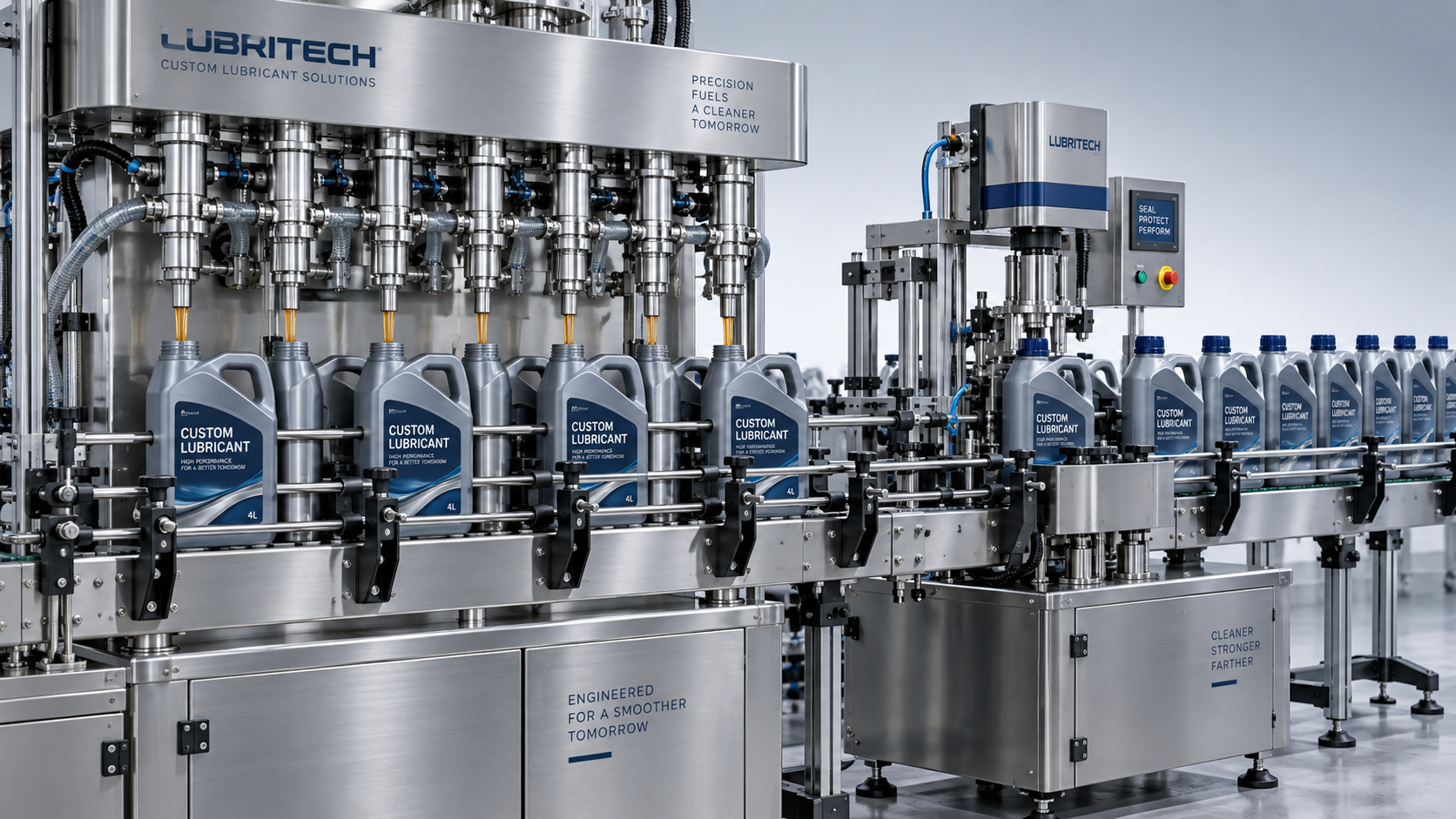
Can Shandong Tuodao Customize a Lubricating Oil Filler?
Can Shandong Tuodao Intelligent Equipment Co. customize a lubricating oil filler to match your production needs? Its stated offering includes tailored filling solutions and supporting production line equipment, making a custom project worth discussing. However, the suitability of a particular configuration needs to be confirmed against your oil, containers, production targets, and acceptance requirements. A general ability to customize filling equipment is not the same as a validated solution for every lubricant formulation.
For lubricant manufacturers and contract packers, the useful question is therefore not simply whether customization is available. It is what must change, how those changes will be tested, and whether the resulting line will run reliably between product changes. Filling speed matters, but so do clean bottle necks, consistent quantities, secure closures, and manageable maintenance.
Start with the oil, not the number of filling heads
“Lubricating oil” covers products with different flow characteristics. Engine oil, gear oil, and hydraulic oil should not automatically be treated as interchangeable filling duties. Even within one product family, temperature can change viscosity enough to affect product transfer, nozzle behavior, and cycle time.
A useful specification identifies viscosity at a stated temperature, the expected operating temperature range, density where relevant, and any tendency to foam or retain air. The product safety data sheet also helps establish handling requirements. If several oils will share the machine, the supplier needs information on the most demanding products, not just the easiest one to demonstrate.
The supply arrangement deserves equal attention. A filler receiving a steady flow from a nearby tank faces different conditions from one drawing through a long pipe from an intermittently replenished source. Inadequate supply can cause unstable dosing or interrupt production even when the filling machine itself is correctly sized. Tank level control, transfer equipment, and inlet conditions should therefore be part of the engineering discussion.
Choose the filling method around measurable requirements
Piston, pump-based, flowmeter-based, and weighing systems are possible approaches to lubricant filling. These are technologies to evaluate with the supplier, not a confirmed list of Shandong Tuodao’s available configurations. The appropriate choice depends on the product range, container sizes, required accuracy, cleaning expectations, and budget.
Positive-displacement dosing can be useful for viscous liquids, but seal compatibility, mechanical wear, and changeover access matter. Flowmeter-based systems require the meter principle to suit the liquid and operating conditions; entrained air can also affect measurement. Gravimetric filling measures mass directly, although container stability, vibration, and settling time need attention. No method removes the need for representative product trials.
Accuracy should be defined before comparing quotations. Ask whether a proposed tolerance applies to each container or to a batch average, whether it is expressed by mass or volume, and under what test conditions it is demonstrated. If mass is used to verify a volume declaration, the density and reference temperature need an agreed basis.
Applicable packaged-quantity requirements should be checked for the destination market. A machine’s repeatability specification alone does not establish compliance, and a broad accuracy claim is difficult to evaluate without a measurement procedure.
Nozzle behavior can matter as much as metering
A correctly measured dose can still create problems if oil strings from the nozzle or wets the bottle neck. Residue can interfere with downstream sealing, soil containers, and increase cleaning work. Depending on the oil, options worth evaluating include controlled shutoff, anti-drip arrangements, adjustable filling speeds, or nozzles that move during filling to manage splash and foam.
These features should be demonstrated rather than accepted by name. A drip-control setting that works with one viscosity may behave differently with another, especially after a pause or at a different product temperature.
Treat containers and closures as engineering inputs
Nominal container capacity is not enough to design bottle handling. Neck opening, overall height, base shape, handle position, rigidity, and dimensional variation influence how containers enter, stop, fill, and leave the machine. Lightweight containers may deform under handling pressure; tall or narrow formats may become unstable during conveyor transfers.
Send physical samples and drawings for every planned format. Include closures, liners, and any sealing components. An adjustable conveyor guide does not prove that every bottle can be handled without additional parts. Nozzle spacing, neck access, locating devices, and capping arrangements may each require changes.
Closure performance should be evaluated with the actual bottle-and-cap combination. Application torque must suit the packaging specification, and any liner or tamper-evident feature must work with the selected process. A closure that looks secure immediately after capping may still need leak and handling tests before the package is approved.
For frequent format changes, ask what the operator must physically adjust. Recipe storage can recall settings, but it cannot eliminate every guide adjustment or change part. The practical issue is whether changeover is repeatable, accessible, and realistic for the people running the line.
Customize the line interfaces, not just the filler
Shandong Tuodao’s stated portfolio includes bottle washing and rinsing machines, automatic fillers, capping and corking machines, shrinking and drying equipment, conveyors, carton sealers, and filtering machines. It also offers filling production line OEM, wholesale supply, and tailored solutions for small businesses. This scope makes it reasonable to discuss both standalone equipment and broader line integration.
Its portfolio serves food, daily chemical, pharmaceutical, and chemical applications, including edible oils, condiments, wine, juice, beverages, and liquid detergents. Those applications provide context for its equipment offering, but they do not by themselves verify lubricant-specific material compatibility or process performance.
Nor should every available machine be included in a lubricant line. Bottle washing is a process decision, not a default requirement: introducing moisture may be undesirable, and any cleaning method needs to suit the container and product cleanliness specification. Filtering likewise requires an agreed purpose and specification rather than automatic inclusion in the layout.
The more important integration questions concern flow and control. What happens when the capper stops? Can the filler pause without creating drips or unstable restart fills? Where will containers accumulate? If inspection or rejection equipment is required, its supply and control responsibilities should be defined. The line’s sustainable output depends on these interfaces, not merely the filler’s advertised cycle rate.
Make maintenance and safety part of the quotation
Product-contact materials should be reviewed against the actual lubricant formulation. A general material description is not sufficient evidence that every seal, hose, gasket, and valve component is suitable. Ask for the proposed materials and the basis for compatibility, especially when additive packages or cleaning agents vary.
Shared equipment also raises questions about residual oil. How much remains in the product path after draining? Which areas require manual cleaning? How will carryover between grades be controlled? The answer affects product loss, changeover time, and the risk of cross-contamination. Easy access to service points can be more useful than an automation feature that complicates routine cleaning.
Safety requirements depend on the product and installation. The safety data sheet, site assessment, and local rules should guide decisions about guarding, spill containment, electrical equipment, and any hazardous-area requirements. Do not assume that every lubricating oil requires explosion-protected equipment, or that a standard machine is suitable without review.
Agree on proof before approving the build
A customization proposal becomes useful when its promises can be tested. Factory acceptance should use representative oil, containers, and closures wherever practical. If substitutes are necessary, record what they cannot demonstrate. A water trial may confirm basic movement and controls, but it cannot fully establish performance with a more viscous lubricant.
Agree in advance on the operating conditions, sampling method, measuring equipment, and acceptance criteria. Include sustained operation and restart behavior rather than relying only on a short demonstration at maximum speed. Where several formats are important, test the demanding combinations instead of assuming that success with one bottle covers the entire range.
- Define acceptable fill variation and the method used to verify it.
- Check nozzle drips, container cleanliness, closure application, and rejected packages.
- Demonstrate a representative product or format changeover.
- Confirm utilities, layout interfaces, manuals, training, and recommended spare parts.
- Separate factory acceptance from installation and site acceptance responsibilities.
For a smaller operation, a simpler configuration may be the more practical choice. Automation should address a real constraint, whether that is dosing consistency, manual handling, or labor availability. Future expansion is worth planning, but only if the proposed layout and controls genuinely support it.
Shandong Tuodao’s stated customization offering provides a starting point for a lubricating oil filling project. The next step is a technical review supported by product data, packaging samples, required output by format, available utilities, and a clear acceptance plan. Ask the supplier to distinguish standard features, engineered modifications, trial-dependent items, and exclusions. That distinction is more valuable than an unqualified “yes” to customization.
Thank you very much for writing to us. Please leave your message and contact information, we will reply to you within 24 hours.