
How Do I Calculate the Required Filling Line Capacity?
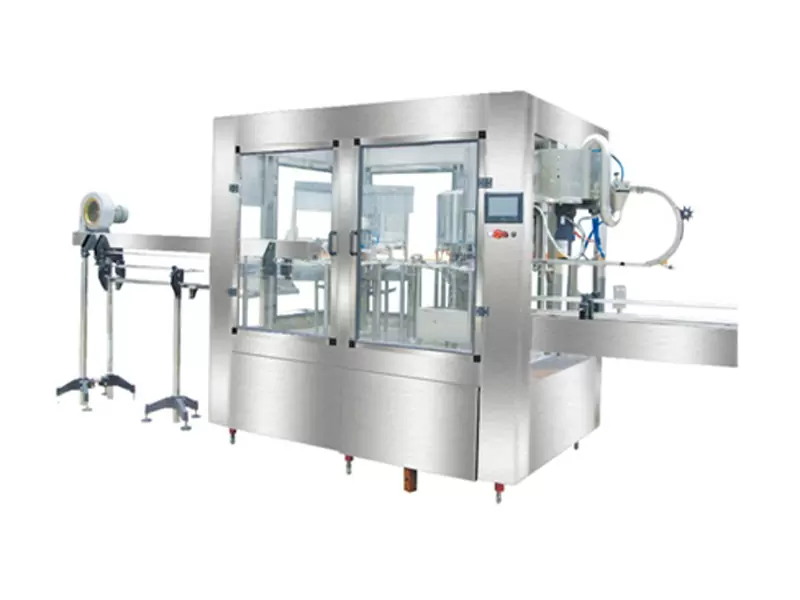
Calculate the required filling line capacity by dividing your target number of saleable bottles by the production time available, then adjusting for equipment losses. The result is the rated speed your line must support under the actual product, container, and operating conditions.
Required rated capacity = Target good bottles ÷ (Planned production hours × Expected overall equipment effectiveness)
This formula works when the time basis and efficiency assumptions are consistent. Cleaning, changeovers, breakdowns, reduced running speed, and rejected bottles must each be accounted for once. After calculating the required rate, confirm that every connected operation can support it, from bottle feeding through final packing.
Translate demand into bottles and a production window
Start with the quantity that must be ready by a specific deadline. Monthly demand alone can hide a capacity shortage if most orders must ship within a few production days. Use the busiest credible production window, including the time needed to prepare finished goods for dispatch.
If demand is expressed in liters, convert it to containers for each pack size:
Required bottles = Required packaged volume in liters ÷ Fill volume per bottle in liters
For example, an illustrative requirement of 30,000 liters in 0.5-liter bottles equals 60,000 bottles. The same liquid volume in larger containers produces fewer units, but larger fills also take longer. A capacity quoted for one bottle size therefore cannot be transferred directly to another.
When orders are specified in cases, multiply the case quantity by the bottles per case. Keep the target in saleable units. Bottles rejected during production belong in the quality allowance rather than being silently added to both demand and the loss calculation.
Next, establish how many hours are actually allocated to that production requirement. Separate calendar time, staffed shift time, and the time scheduled for production. An eight-hour shift does not automatically provide eight hours of available line time.
Choose one consistent method for production losses
There are two useful calculation methods. The choice depends on the reliability of the available records.
Use OEE when its measurement basis is clear
Overall equipment effectiveness, or OEE, combines availability, performance, and quality:
OEE = Availability × Performance × Quality
- Availability measures operating time against planned production time. Breakdowns and changeovers reduce availability when they fall inside that time boundary.
- Performance captures reduced speed and short stops during operating time, measured against a defined reference speed for the product and container.
- Quality is the proportion of produced units that meet the acceptance criteria without requiring rework.
Use OEE measured across the complete line if the objective is finished output. A filler’s individual OEE will not capture every downstream restriction. Also confirm that the reference speed used to calculate performance matches the rated capacity used in the sizing formula.
Do not deduct changeover hours separately if those same hours already reduce the OEE availability factor. Likewise, do not add another rejection allowance when quality losses are already included.
Build the calculation from separate allowances
Where reliable OEE records are unavailable, subtract identified nonrunning periods from scheduled hours, then apply separate running-speed and good-output factors:
Required rated capacity = Target good bottles ÷ (Net running hours × Running-speed factor × Good-output fraction)
Net running hours should already exclude the stoppages explicitly budgeted. The running-speed factor then represents losses within the remaining time, such as brief interruptions and operation below the reference speed. Keep written definitions alongside the calculation so the same loss does not enter twice.
A new line requires assumptions until production trials establish measured values. Use a range based on comparable products and equipment, and identify which assumptions remain unverified. An efficiency percentage without a defined time boundary is not a dependable sizing input.
A worked example from demand to rated speed
Consider a hypothetical requirement for 24,000 saleable bottles during one eight-hour shift. Assume one hour is reserved for scheduled activities outside planned production time, leaving seven hours. For this example, assume line OEE during those seven hours is 70%, including the remaining availability, performance, and quality losses.
The calculated requirement is approximately 81.6 bottles per minute. A line rated at 3,429 bottles per hour would only meet the target with no losses during the seven-hour production window. Equipment capable of 5,000 bottles per hour would produce 24,500 good bottles under the stated assumptions, leaving little additional capacity for growth or worse operating conditions.
These figures illustrate the calculation; they are not an expected efficiency or a recommended equipment size. Actual selection requires demonstrated performance with the intended liquid, bottle, closure, and packing arrangement.
Calculate mixed products as production time
When several products or bottle formats share one line, calculate the hours required for each. Adding their bottle quantities and applying one speed can hide substantial differences between formats.
Total required hours = Sum of [Good bottles for each product ÷ (Its rated speed × Its applicable effectiveness)] + Separately budgeted changeover hours
The effectiveness factor in this equation must exclude any changeovers added separately. Include cleaning, format adjustments, product clearance, and startup verification in the changeover budget where those activities consume production time.
Use achievable product-specific speeds. A foaming detergent can require slower filling, controlled nozzle withdrawal, or settling time. A viscous edible oil can fill more slowly at a lower processing temperature. A narrow bottle neck or unstable container can limit the usable speed even when the dosing system has sufficient liquid delivery capacity.
Batch sequence also matters. A schedule with frequent small runs consumes more changeover time than the same volume grouped into longer campaigns. Test the calculation against the intended production sequence, particularly when cleaning requirements differ between successive products.
Find the station that limits finished output
The complete line must sustain the calculated throughput. Convert each station’s demonstrated capacity into the same unit, preferably bottles per minute, using the same container and product conditions. The lowest sustainable rate establishes the immediate constraint.
Pay attention to the basis of each specification. A rinsing operation can be limited by required treatment time. Closure application depends on feeding reliability and the time needed to achieve the specified seal. Drying or shrinking requires sufficient exposure time at the selected conveyor speed. Increasing transport speed without preserving that exposure can create unacceptable output.
Case packing introduces another unit conversion:
Required cases per minute = Bottles per minute ÷ Bottles per case
At the illustrative rate of 81.6 bottles per minute, a 12-bottle case format requires 6.8 cases per minute while the line is running at that rate. Downstream equipment also needs appropriate recovery capacity after interruptions; a station with no excess capacity cannot clear an accumulated queue while upstream production continues at full speed.
Conveyor accumulation helps absorb brief stops, but it does not correct a permanent speed mismatch. Estimate buffer time as usable stored bottles divided by the incoming rate, subject to the conveyor’s actual behavior. Crowded bottles, transfer instability, and pressure at curves can reduce usable storage below the geometric maximum.
Verify the filling rate against liquid supply and cycle time
A headline bottle rate needs a corresponding liquid flow rate:
Required liquid delivery in liters per hour = Bottles per hour × Liters per bottle
At 4,898 bottles per hour with a 0.5-liter fill, the average packaged volume is 2,449 liters per hour. The supply arrangement must support the filler’s actual withdrawal pattern as well as this average. With intermittent filling, instantaneous demand can exceed average consumption unless a suitable buffer vessel separates supply from dosing.
Filters, pipe diameter, pressure losses, product viscosity, and available supply pressure affect delivery. A restriction upstream can make the filler wait for product even though its mechanical cycle supports the required bottle rate.
For an intermittent machine that fills several bottles per cycle, a useful preliminary relationship is:
Theoretical bottles per hour = Bottles filled per cycle × 3,600 ÷ Total cycle time in seconds
Total cycle time includes the critical sequence of container positioning, nozzle movement, filling, any settling period, and discharge. Some actions overlap; others occur sequentially. Dividing the fill volume by pump flow alone leaves out these movements and can overstate capacity. Rotary and continuous-motion systems require a calculation suited to their operating geometry.
Allow for uncertainty where it actually occurs
Apply growth to the demand forecast before calculating equipment capacity. If forecast demand rises by an explicitly chosen amount, increase the required good bottles accordingly. Keep this separate from the allowance for operating losses so the reason for each adjustment remains visible.
Then test less favorable conditions. In the worked example, reducing assumed OEE from 70% to 60% increases the required rated capacity from approximately 4,898 to 5,714 bottles per hour. This sensitivity shows how strongly equipment selection depends on the effectiveness assumption.
Additional capacity does not always require a faster line. More scheduled hours, fewer changeovers, or removal of a recurring downstream restriction can change the requirement. Compare these options against the actual production deadline and available staffing hours.
Confirm the final selection through a sustained trial using representative product and packaging. Record accepted finished bottles, elapsed production time, stoppage causes, rejects, and any accumulation that continues to grow. Include replenishment and routine interventions within the agreed trial boundary. The resulting good output per scheduled hour provides the evidence needed to validate the original capacity calculation.
Thank you very much for writing to us. Please leave your message and contact information, we will reply to you within 24 hours.