
Operation and Maintenance Tips for Fully Automatic Beverage Filling Production Line
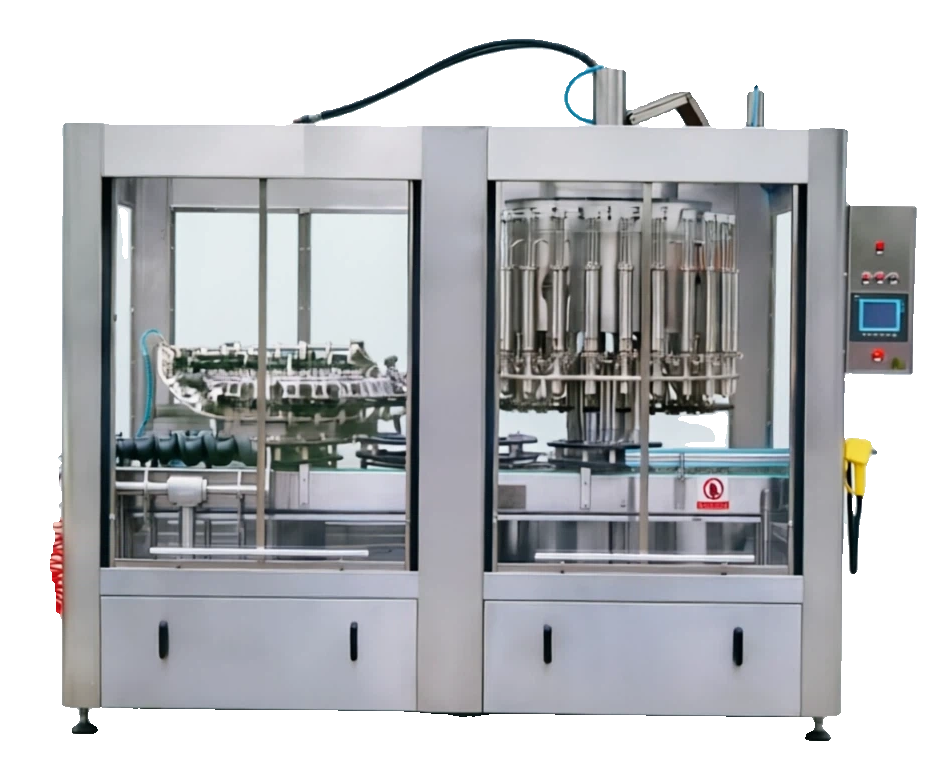
In recent years, technology has been continuously advancing, with new technologies being applied to liquid filling production lines. As we have entered the era of industrialization and information technology, the upgrading of industrial production and the information industry has led to the development of efficient fully automatic beverage filling production lines. These lines adopt high-quality components such as PLCs, photoelectric sensors, and touch screens, making machine operation and adjustment convenient while achieving high filling accuracy.
Operation and Maintenance Tips:
1. Standardized container requirements
Because the fully automatic beverage filling machine is an automated machine, the dimensions of easy-open bottles, bottle seals, and bottle caps must be uniform.
2. Pre-production machine test
Before starting production, use the manual mode (jog function / joystick control) to test the machine. Observe whether there is any abnormal movement. Only after confirming that everything is normal and correct can production begin.
3. Proper tool use during adjustments
When adjusting the machine, use appropriate tools. Do not use oversized tools, apply excessive force when disassembling parts, or strike components forcefully, as this may damage parts or affect machine performance.
4. Post-adjustment inspection
Whenever the machine has been adjusted (including but not limited to shutdown maintenance or long-term停机 periods), be sure to tighten any screws that have been loosened or found to be loose. After confirming that all adjustments are correct, switch to manual mode and observe whether the machine's movements meet requirements. Only then can production resume.
5. Keep the machine clean
The fully automatic beverage filling production line must be kept clean. Oil stains, liquid residue, or glass debris on the machine are strictly prohibited, as they may cause corrosion or damage. Therefore:
(a) During production, promptly remove any liquid residue or glass debris.
(b) Before each shift change, clean all surfaces of the machine, and add clean lubricating oil of the correct grade to the lubrication points of all moving parts.
(c) Perform a thorough cleaning once a week, especially cleaning areas that are not easily accessible during normal use, either by wiping or blowing clean with compressed air.
Thank you very much for writing to us. Please leave your message and contact information, we will reply to you within 24 hours.