
Packaging Filling Line: Matching Filler and End-of-Line
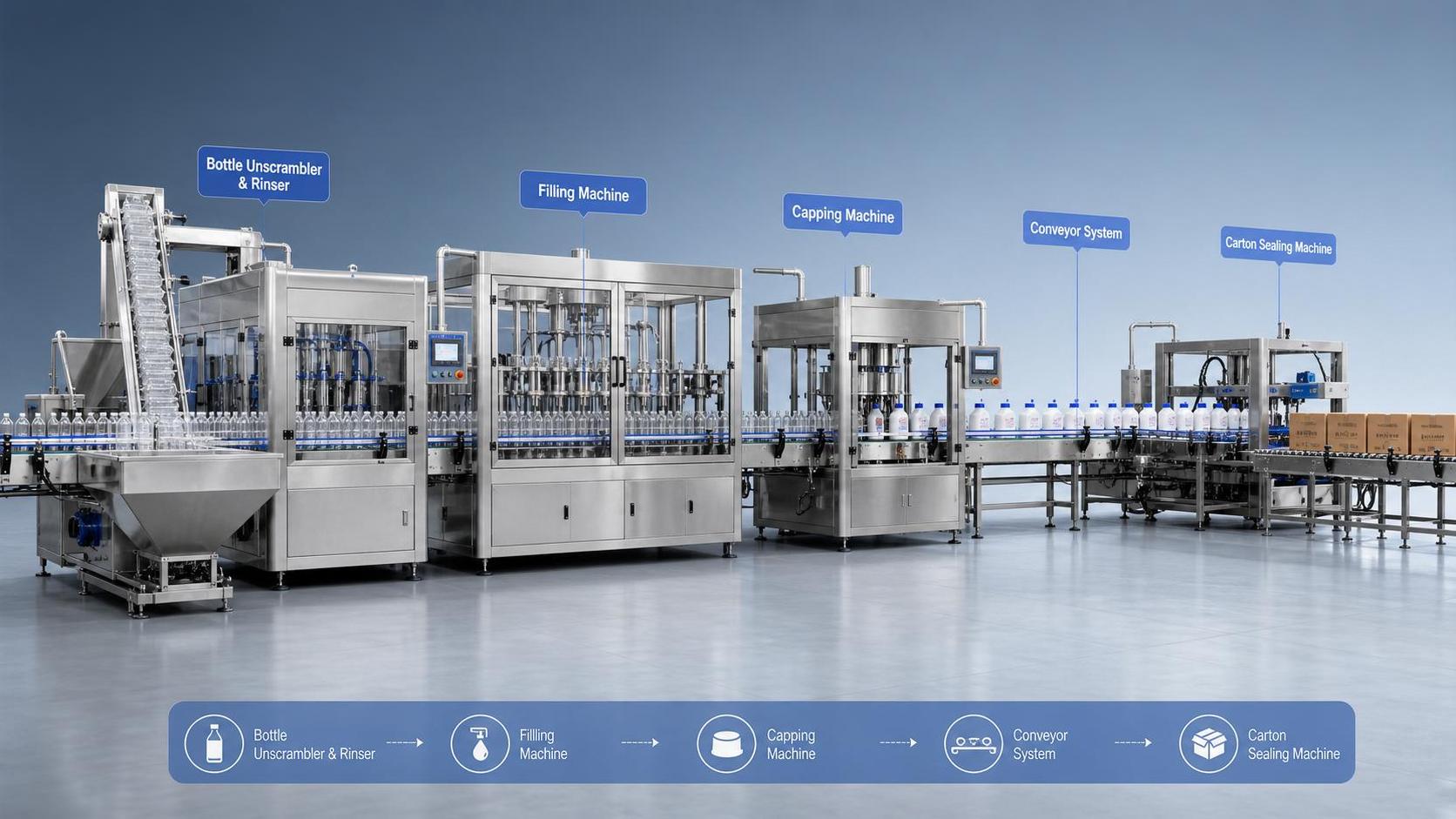
Packaging filling line decisions start with line coordination

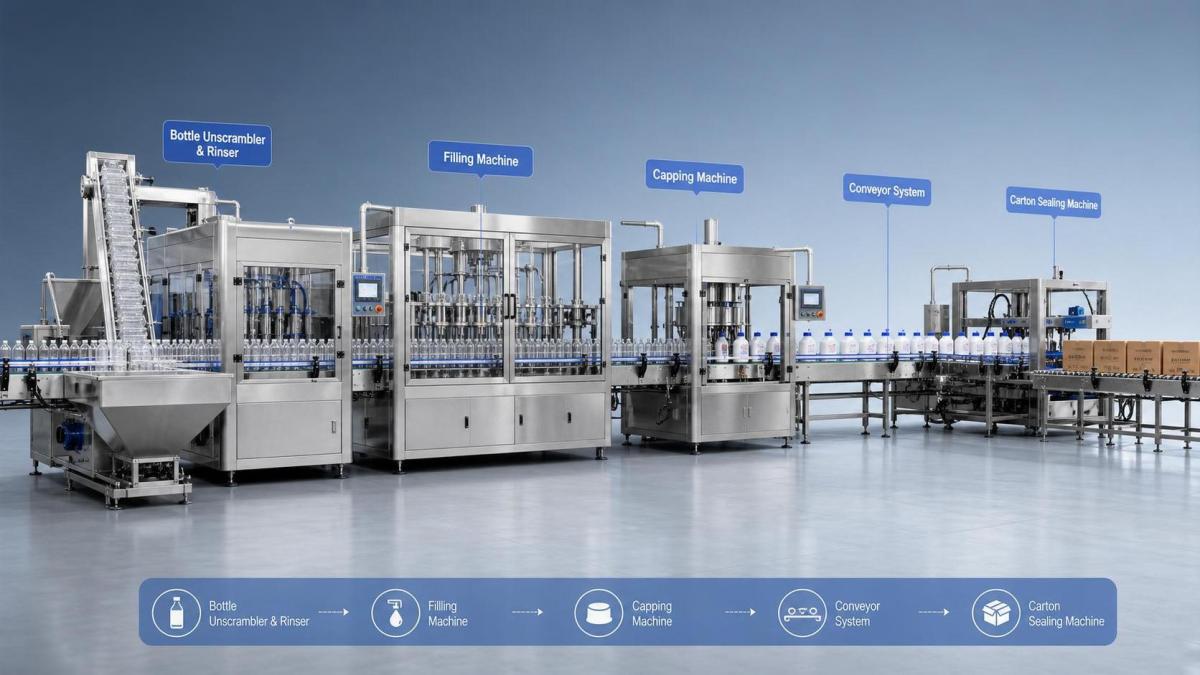
A strong packaging filling line is not defined by filling speed alone.
It works when rinsing, filling, capping, conveying, sealing, and drying stay balanced under real production pressure.
That balance matters even more when one site handles food, daily chemical, pharmaceutical, or chemical products on related platforms.
In actual use, the right packaging filling line is usually the one that keeps product flow stable from filler to end-of-line.
This is why technical matching often matters more than any single machine specification.
Different production scenes change what the line must handle
A packaging filling line for thin beverages behaves differently from one used for viscous personal care liquids.
The filler may run well in both cases, yet downstream performance can change because bottle stability, cap torque, and carton loading react differently.
More complex products also bring hidden conditions.
Foaming liquids may need gentler transfer.
Pharmaceutical batches may need cleaner transitions and more controlled changeovers.
Chemical products may require stronger material compatibility across filters, pumps, seals, and containers.
Food and beverage lines often depend on steady flow, not peak speed
In food production, a packaging filling line often includes bottle washing or rinsing before filling.
If rinsing capacity is lower than filler output, the whole line loses rhythm before capping even begins.
For this scene, a common judgment point is whether conveyors can absorb short-term variation without causing bottle accumulation or empty filler infeed.
Shrinking and drying equipment also matters.
Wet bottles can reduce label quality, while unstable carton sealing creates problems later in warehousing.
Daily chemical products need smoother transitions between handling stages
Lotions, detergents, and gel products usually make the packaging filling line more sensitive to viscosity changes.
Here, the key is not only the automatic filling machine.
It is whether the capping machine, transfer sections, and end-of-line buffering can prevent tipped bottles, residue buildup, and rework.
This scene also benefits from flexible OEM or tailored line design, especially when bottle shapes change frequently.
Where pharmaceutical and chemical lines need a different judgment standard
A packaging filling line in regulated or corrosive environments is usually judged by consistency, compatibility, and cleaning practicality.
For pharmaceutical applications, frequent line clearance and batch changeovers can make compact layouts harder to maintain.
For chemical applications, filter selection, seal materials, and corrosion resistance can affect uptime more than nominal throughput.
In these cases, the better packaging filling line is often the one with fewer mismatch points between filler, capper, conveyor, and sealing unit.
Common mistakes appear when the line is viewed too narrowly
One frequent mistake is selecting a filler first and forcing the rest of the packaging filling line to fit later.
That approach often creates bottlenecks at capping, drying, or carton sealing.
Another issue is treating similar containers as identical.
A small neck change can alter cap feed stability.
A softer bottle wall can affect conveyor pressure and pack-out accuracy.
It is also common to focus on purchase cost while underestimating cleaning time, spare parts, and future format changes.
A more reliable way to match equipment
- Map the full product route from rinsing or filtration to carton sealing.
- Measure real output by stable hourly performance, not theoretical peak speed.
- Review changeover frequency, bottle formats, and operator access points.
- Check whether conveyors provide useful buffering between critical stations.
- Confirm utility conditions, water quality, and cleaning requirements early.
Before finalizing a packaging filling line, confirm the support conditions
Many line problems come from support systems rather than the filler itself.
Water treatment, filtration, and stable utility supply can directly affect product quality and maintenance intervals.
This is especially relevant where rinsing, boiler feed, cooling circulation, or reverse osmosis pre-treatment influence upstream reliability.
As a practical extension, Water Softening Equipment (Water Softener) can support food, beverage, chemical, and pharmaceutical operations that need lower hardness water.
With ion exchange treatment, automatic regeneration, optional dual-tank continuity, and outlet hardness up to ≤0.03 mmol/L, it fits sites that need stable utility conditions without adding a large footprint.
A better next step is to compare actual product characteristics, end-of-line targets, water conditions, and maintenance limits before locking the final packaging filling line configuration.
Thank you very much for writing to us. Please leave your message and contact information, we will reply to you within 24 hours.