
What an Unmanned Filling Line Manufacturer Should Prove
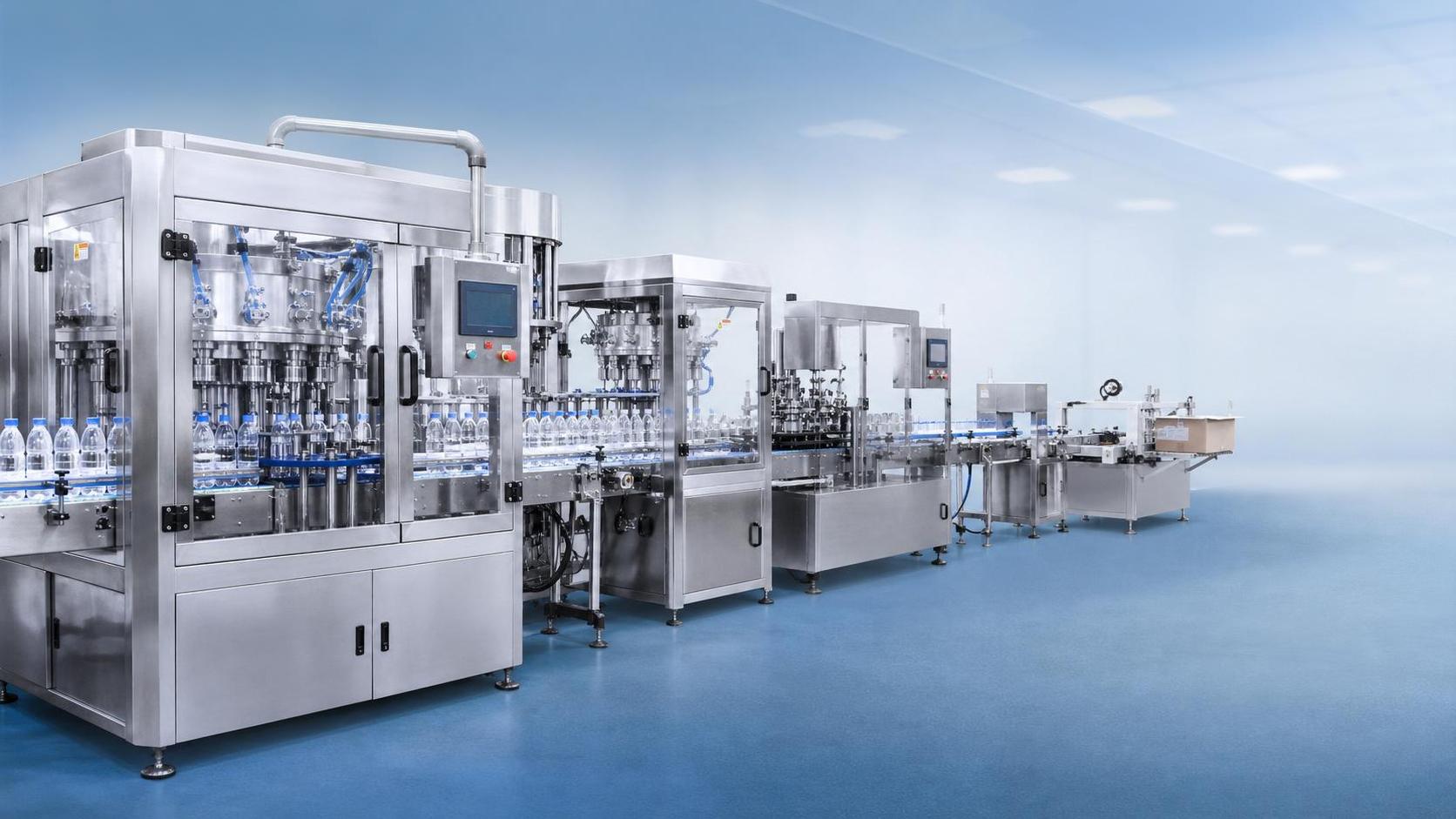
What should an unmanned filling line manufacturer really prove?

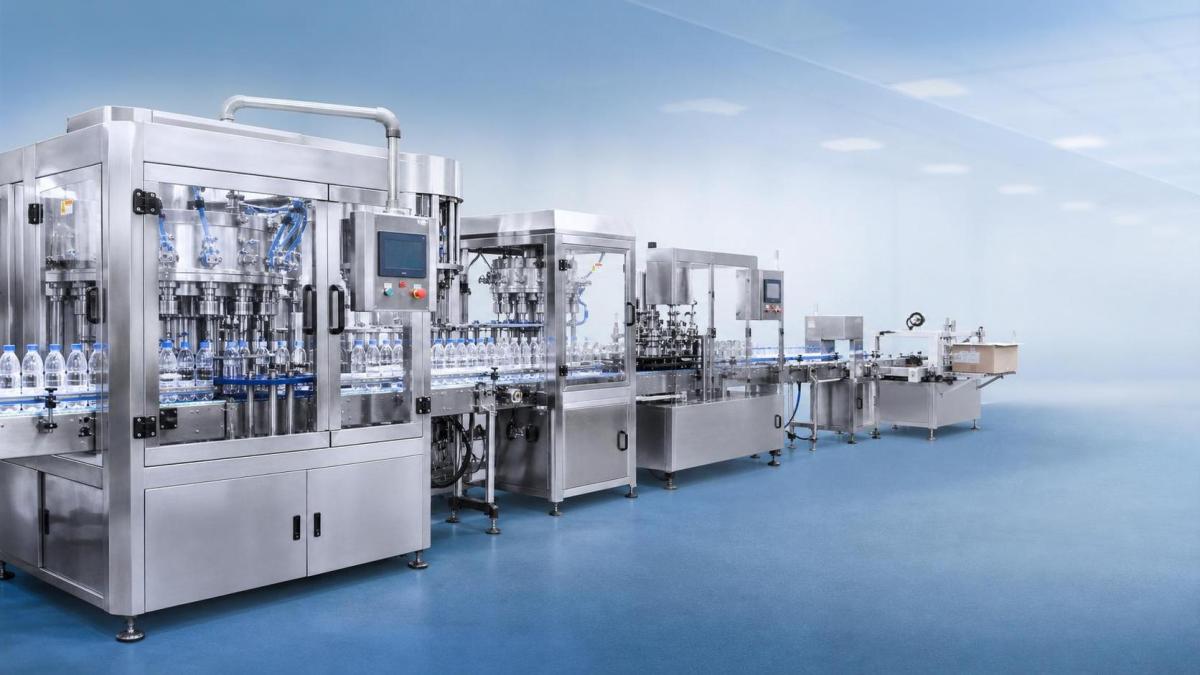
Choosing an unmanned filling line manufacturer is not a simple equipment comparison.
The real question is whether the supplier can prove stable automation, smooth line integration, and dependable long-term support.
In packaging production lines, performance comes from the whole system.
That includes bottle washing, rinsing, filling, capping, drying, conveying, sealing, filtration, and downstream handling working as one process.
A strong unmanned filling line manufacturer should also show adaptability across food, daily chemical, pharmaceutical, and chemical applications.
Is “unmanned” just about fewer operators?
Not really. That is the first misunderstanding to clear up.
A true unmanned filling line manufacturer should prove that key actions are automated, monitored, and linked through control logic.
This usually includes automatic infeed, filling accuracy control, cap feeding, rejection handling, alarm response, and production data visibility.
In practical terms, fewer operators only matter if output stays consistent.
If the line still depends on constant manual adjustment, it is automated equipment, but not a reliable unmanned solution.
How can you judge whether the line is truly integrated?
This is where many evaluations become sharper.
A capable unmanned filling line manufacturer should explain how each machine communicates with the next one.
That means more than offering separate machines in one quotation.
It means line speed matching, buffer design, changeover logic, container compatibility, and fault coordination.
For example, an automatic filler running fast is not enough.
If rinsing, capping, shrink drying, and carton sealing cannot keep pace, overall efficiency drops quickly.
A useful way to compare suppliers is to ask for a line-level explanation, not only a machine list.
Which proof matters more than a polished proposal?
Documented evidence matters more than presentation quality.
Ask the unmanned filling line manufacturer to show application cases close to your product, container, viscosity, hygiene level, and target output.
Compliance also needs attention.
Food and pharmaceutical lines often require stronger material, cleaning, and validation discipline than general chemical packaging.
Need-to-know proof usually includes:
- Line layout drawings with process flow logic
- Cycle time or throughput calculation
- Material specifications for product-contact parts
- FAT or testing approach before shipment
- Commissioning and training scope
When OEM or small-batch flexibility is important, the supplier should also explain how the line can scale without a full redesign.
What risks are often missed during supplier selection?
The biggest risk is judging only by filling speed.
In actual production, downtime, cleaning time, changeover time, and reject rates often shape total cost more than nameplate capacity.
Another common issue is underestimating utilities and upstream quality control.
An unmanned filling line manufacturer should discuss water quality, compressed air, power stability, and filtration requirements early.
This is especially important in food, beverage, pharmaceutical, and sensitive chemical processes.
If these conditions are ignored, even a well-built line may struggle to meet hygiene or consistency targets.
How should the final decision be made?
A practical decision usually comes from a short verification list.
- Confirm the required output under real operating conditions, not ideal ones
- Check whether the supplier covers the full line, not only the filler
- Compare changeover time, sanitation design, and fault recovery logic
- Review service response, spare parts planning, and upgrade options
- Match the solution to current demand and future expansion
The best unmanned filling line manufacturer is usually the one that can explain trade-offs clearly, not hide them.
That includes balancing automation level, budget, footprint, compliance, and implementation time.
As a final check, review supporting utilities as carefully as the line itself.
For projects needing purified process water, an option such as 1 T/H Single-Stage Reverse Osmosis Water Treatment Equipment can be a relevant add-on.
It suits food and beverage, brewing, chemical, pharmaceutical, electronics, and commercial applications, while offering automatic control, compact installation, and purified water performance.
In other words, good selection work starts with process detail, then checks whether the supplier can prove every link in the line will hold up in production.
Thank you very much for writing to us. Please leave your message and contact information, we will reply to you within 24 hours.