
Bottle Filling Production Line: Key Stations and Bottlenecks
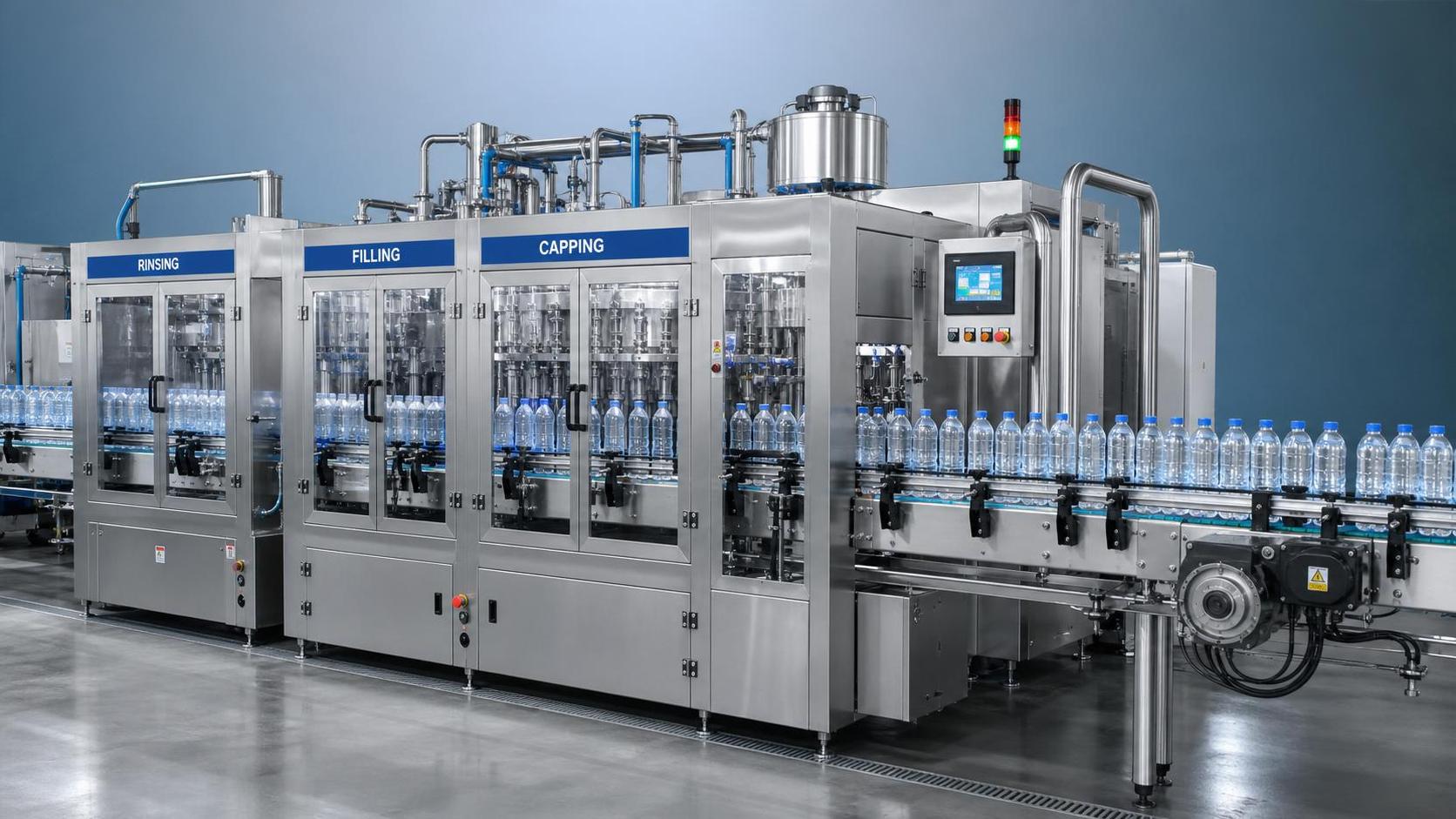
A bottle filling production line performs as a connected system, not as a set of isolated machines. When one station slows down, the entire packaging line absorbs the impact through lost output, unstable quality, and unplanned downtime.
That is why line planning now focuses less on single-machine speed and more on station balance. In food, daily chemical, pharmaceutical, and chemical production, reliable flow matters as much as filling accuracy.
Where the line really starts
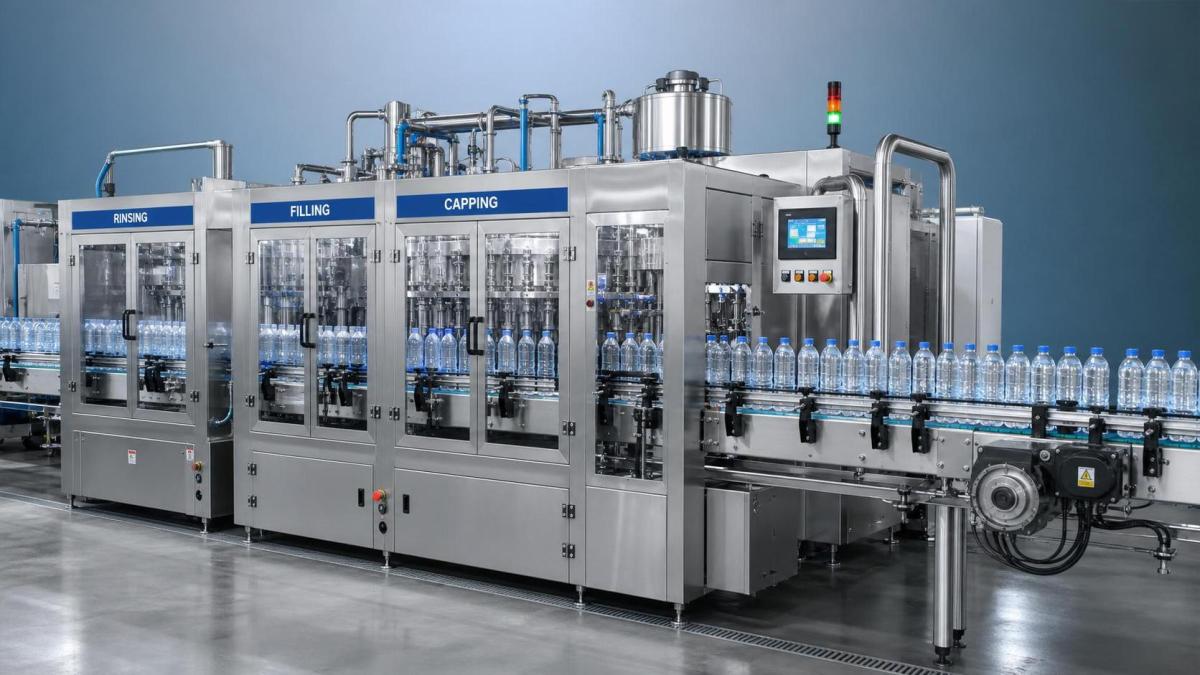
A typical bottle filling production line includes bottle washing or rinsing, filling, capping or corking, shrinking or drying, conveying, inspection, and final carton sealing. Filtration and liquid preparation also shape line stability before bottles even enter the main path.
In practice, line efficiency depends on how these stations transfer containers, synchronize speeds, and recover from short stops. A line with advanced fillers can still underperform if bottle infeed or cap supply remains inconsistent.
Key stations that define output
Bottle preparation is the first control point. Washing and rinsing must remove particles, residues, or moisture without damaging lightweight containers or slowing the upstream feed.
Filling is usually the core capacity station. Accuracy, foaming behavior, viscosity, nozzle design, and container positioning all influence cycle time and product loss.
Capping is equally critical because poor closure quality creates rework, leakage, and customer complaints. Even a small cap-placement error can interrupt the bottle filling production line far beyond the capping zone.
Drying and shrinking matter when labels, coding, or secondary packaging require a clean and stable surface. Conveying then connects every station, absorbing small speed variations and protecting bottle spacing.
At the back end, carton sealing is often underestimated. Yet frequent jams here can block the whole discharge section and cause accumulation across the line.
Common bottlenecks and why they appear
Most bottlenecks are not caused by one dramatic failure. They usually come from repeated minor interruptions, poor matching between stations, or changeover settings that drift over time.
- Inconsistent bottle supply creates starved fillers and unstable downstream rhythm.
- Foaming or splashing reduces filling speed and increases reject rates.
- Cap feeding faults trigger frequent stops that look small but consume large production windows.
- Conveyor accumulation causes pressure, scuffing, and poor bottle transfer.
- Slow manual adjustment during format change wastes available production hours.
For expanding operations, the issue is often equipment compatibility. A bottle filling production line should be designed as a coordinated package, including rinsing machines, automatic fillers, capping units, drying modules, conveyors, filters, and carton sealing equipment.
What matters during planning or upgrade
A useful review starts with throughput by station, not with nameplate speed alone. Rated capacity can mislead when bottle shape, liquid properties, or closure type change actual operating conditions.
This is also where flexible supply models become useful. OEM support, wholesale equipment sourcing, and tailored configurations can help smaller projects avoid overspecifying a line that will never run at full theoretical capacity.
Practical ways to reduce bottlenecks
The best improvements are usually operational and mechanical at the same time. Better line performance often comes from simpler changes than expected.
- Measure micro-stops by station instead of tracking only major downtime.
- Match conveyor speed and buffer capacity to real container behavior.
- Standardize changeover settings for bottle height, guide rails, and closure torque.
- Check filtration, rinsing quality, and filling conditions together, not separately.
- Review end-of-line performance because carton sealing issues often hide upstream gains.
When evaluating the next step, map the bottle filling production line from container entry to packed case output. The most valuable decision usually comes from identifying the station that limits stable flow, not just peak speed.
For lines using aluminum closures, one useful reference is the Aluminum Cap Sealing Machine. It supports rolling or crimping closure, forms a secure mechanical interlock, offers tamper-evident sealing, and fits several bottle neck structures with adjustable sealing parameters in a compact design.
That kind of targeted review helps clarify whether the priority is higher output, more stable sealing, easier changeover, or better compatibility across the full packaging line.
Thank you very much for writing to us. Please leave your message and contact information, we will reply to you within 24 hours.