
Industrial Liquid Filling Machine: Viscosity Range Explained
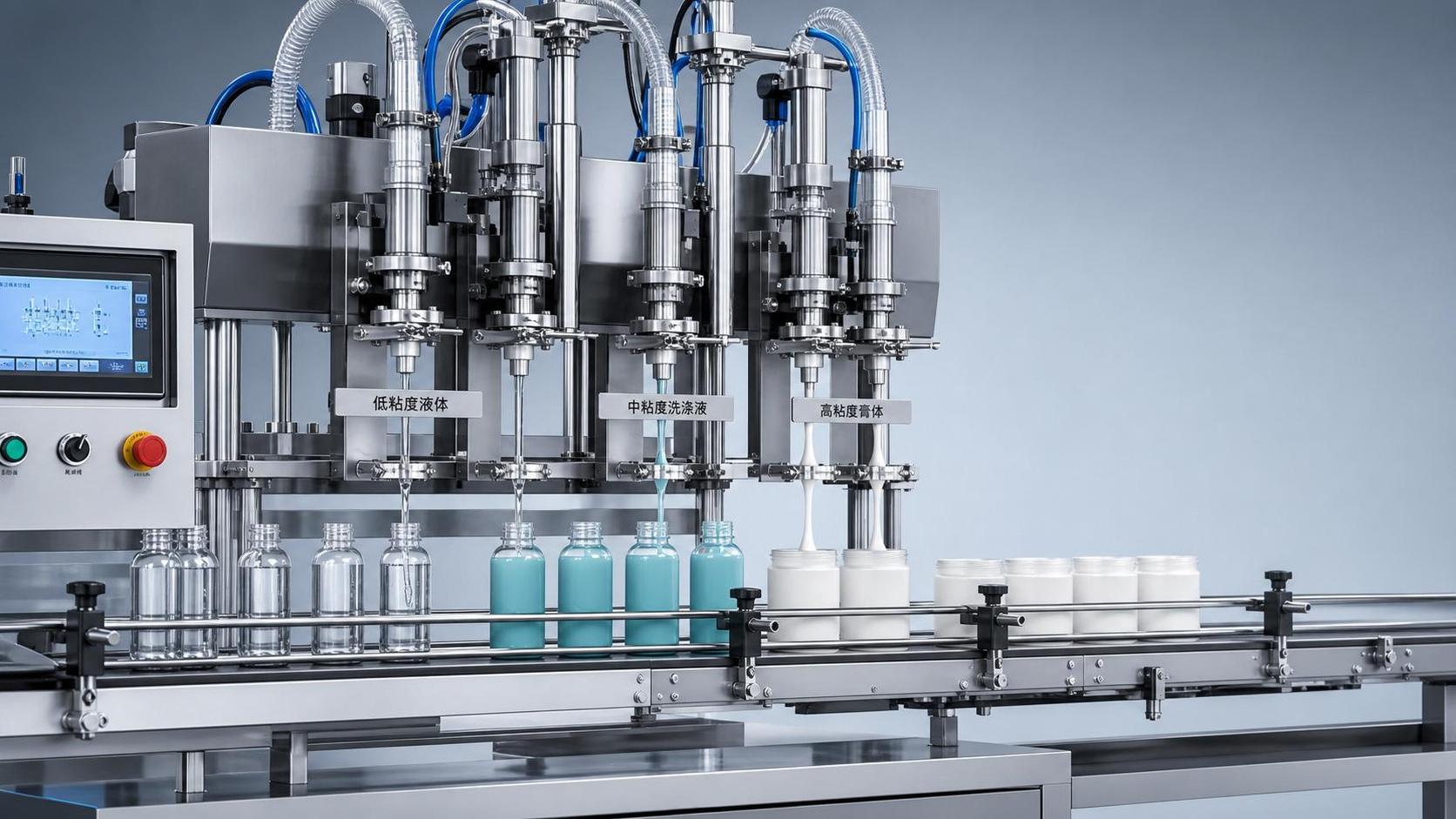
Why Viscosity Matters in an Industrial Liquid Filling Machine
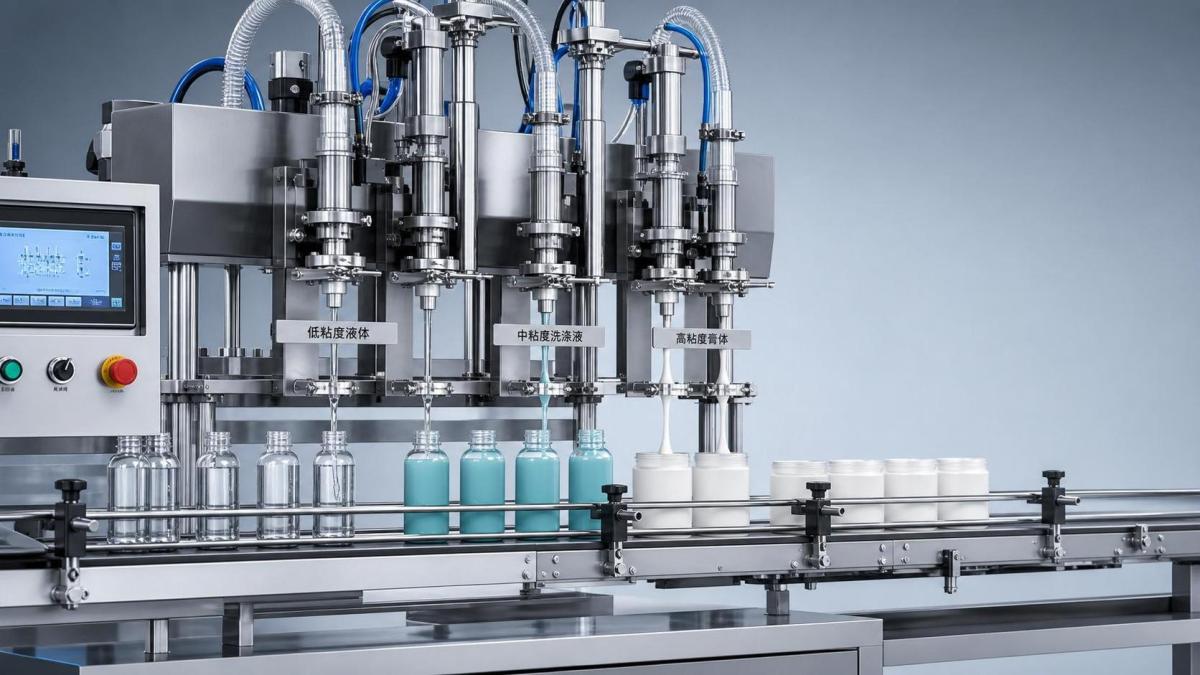
Choosing the right industrial liquid filling machine starts with product flow behavior, not only container size or target output.
Viscosity affects fill speed, dosing stability, nozzle design, suction behavior, and the risk of dripping or foaming.
In practical line design, a low-viscosity product can run poorly on equipment built for heavy creams or gels.
The reverse is also true. Thick liquids often need stronger pumping force and more controlled filling motion.
That is why viscosity is one of the first checkpoints when comparing any industrial liquid filling machine.
Typical Viscosity Range by Filling Technology
There is no single universal viscosity limit because formula behavior changes with temperature, shear, and suspended particles.
Still, common filling methods follow a clear technical pattern.
- Gravity fillers suit water-like liquids, juices, solvents, and other free-flowing products.
- Overflow fillers work well for thin liquids where visual fill level matters.
- Piston fillers handle medium to high viscosity products such as sauces, creams, gels, and pastes.
- Pump fillers offer flexibility across a wide range, especially with servo control and suitable pump selection.
- Pressure filling systems support demanding products that resist flow or require faster transfer.
As a rule, the wider the viscosity range, the more important valve design, sealing quality, and control precision become.
A practical classification
Key Selection Factors Beyond Viscosity
A good industrial liquid filling machine match depends on more than a viscosity number on a lab sheet.
Recent evaluations show that formula variability often creates more trouble than average viscosity itself.
- Temperature sensitivity: heated products may thin during filling and behave differently at startup.
- Shear response: some liquids become easier to pump when moving, then thicken again at the nozzle.
- Particles or pulp: suspended solids change valve clearance and nozzle diameter requirements.
- Foaming tendency: thin surfactant-based liquids may need bottom-up filling or slower diving nozzles.
- Container geometry: narrow-neck bottles increase back pressure and affect filling speed.
This also means line compatibility matters. Bottle rinsing, capping, conveying, sealing, and filtration should be considered together.
For many factories, the best result comes from a full packaging line instead of a stand-alone filler.
How to Evaluate Filling Accuracy and Production Stability
When reviewing an industrial liquid filling machine, accuracy should be tested under real production conditions, not ideal samples.
Use the actual product, expected temperature, real bottle format, and target line speed.
- Check repeatability over continuous cycles, not only the first ten fills.
- Observe nozzle cutoff to identify dripping, stringing, or tailing.
- Confirm cleaning access, especially for sticky or sanitary products.
- Review changeover time if multiple viscosities share one line.
- Verify pump, piston, and seal materials against chemical compatibility.
A more reliable signal is stable performance across shifts. That includes fill consistency, reduced downtime, and easy operator adjustment.
Matching Equipment to Industry Needs
Different sectors place different demands on an industrial liquid filling machine and the surrounding production line.
- Food applications focus on hygiene, cleanability, and gentle product handling.
- Daily chemical products often need anti-foam control and flexible bottle changeover.
- Pharmaceutical production emphasizes dosing precision, validation, and material compliance.
- Chemical filling may require corrosion resistance, sealing reliability, and safer transfer systems.
Suppliers with bottle washing, automatic filling, capping, shrinking, conveying, carton sealing, and filtering equipment can simplify integration work.
That flexibility is especially useful for OEM projects, wholesale buyers, and smaller businesses planning future capacity upgrades.
Conclusion and Supporting Utility Equipment
In the end, viscosity is the starting point for selecting an industrial liquid filling machine, not the final decision alone.
The better approach is to compare viscosity range with pump type, nozzle control, line speed, cleaning needs, and container characteristics.
For stable line performance, supporting utilities also deserve attention. Water quality, for example, affects rinsing, boiler feed, and process consistency.
As an added solution, Water Softening Equipment (Water Softener) helps remove calcium and magnesium ions through ion exchange technology.
Available in FRP and stainless steel configurations, model 001×7 supports automatic regeneration, continuous supply options, and outlet hardness of ≤0.03 mmol/L.
It fits boiler feed water, cooling circulation water, reverse osmosis pre-treatment, and food, chemical, pharmaceutical, hotel, and building applications.
If you are comparing filling line options, include utility support early. It often improves long-term efficiency more than expected.
Thank you very much for writing to us. Please leave your message and contact information, we will reply to you within 24 hours.