Filling Production Line: How to Estimate Space and Utilities
Filling Production Line: How to Estimate Space and Utilities

Planning a filling production line starts before equipment reaches the plant.
Good estimates reduce layout clashes, startup delays, and costly utility changes.
A practical review should cover process flow, operator access, maintenance zones, and future output targets.
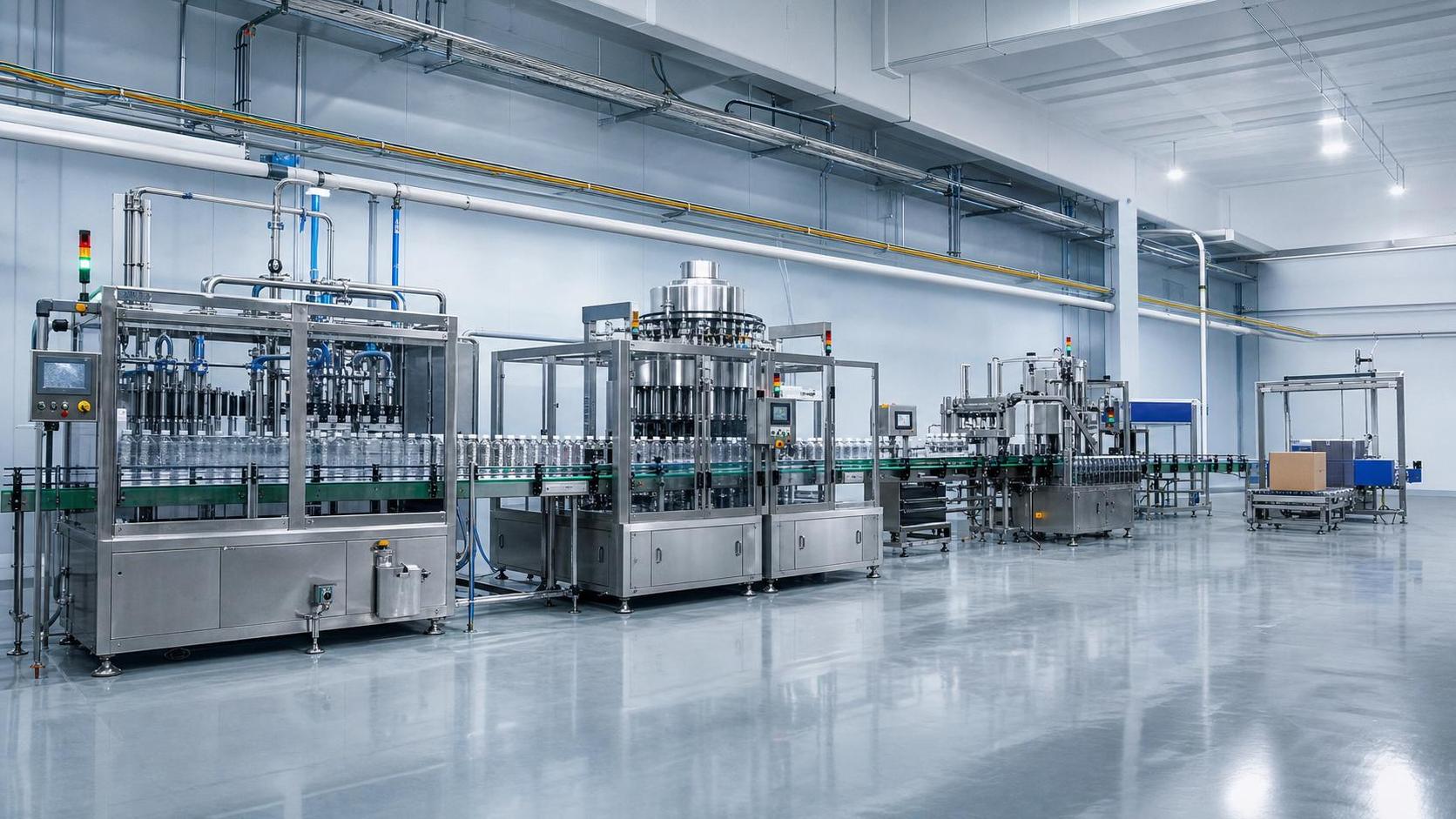
In a typical filling production line, rinsing, filling, capping, drying, conveying, and packing all affect footprint.
That also means utility demand grows with line speed, automation level, and container type.
Start With the Process Map
Begin by listing every machine in sequence, not just the core filler.
Many teams underestimate buffer conveyors, inspection points, and carton sealing stations.
For a complete filling production line, include upstream and downstream handling areas.
- Bottle infeed and unscrambling
- Bottle washing or rinsing
- Automatic filling and capping
- Drying, coding, labeling, and packing
This step gives a realistic line length and shows where utilities must connect.
Estimate Space Beyond Machine Dimensions
Supplier drawings usually show equipment size, but installed size is different.
A filling production line needs room for movement, service, and safe material flow.
- Leave access around panels, pumps, and change parts
- Reserve aisle space for operators and pallet traffic
- Allow clearance for bottle jams and maintenance tasks
- Keep expansion space for future modules or higher speeds
As a rule, layout planning should use operating footprint, not machine body footprint.
That difference often decides whether installation stays on schedule.
Check the Utility Load Early
Utility planning should be done together with layout planning.
If handled late, the filling production line may require expensive rework.
Power
Add the rated load of each machine, then apply a realistic diversity factor.
Also check voltage, phase, cable routing, and panel position.
Water
Rinsing systems, cleaning cycles, and some cooling tasks need stable water supply.
Confirm flow rate, pressure, drainage, and water quality requirements.
Compressed Air
Pneumatic cylinders, valve actuation, and reject systems depend on clean compressed air.
Low pressure or wet air can reduce line stability.
Use a Simple Planning Table
A compact table helps compare assumptions before procurement starts.
Plan for Growth, Not Only Day One
A filling production line often changes within the first two years.
New bottle sizes, higher speeds, or extra inspection steps are common.
So leave spare utility capacity and keep one side open for line extension.
This is especially useful in food, daily chemical, pharmaceutical, and chemical applications.
Complete line suppliers can also support OEM, wholesale, and tailored setups for smaller operations.
A Useful Downstream Addition
When estimating downstream space, labeling is often added later than it should be.
A Self-Adhesive Labeling Machine can fit neatly into food, daily chemical, pharmaceutical, and electronics packaging lines.
It applies labels to bottles, cans, boxes, and other containers without a separate gluing system.
It also supports round, square, flat, and oval containers with relatively easy changeover.
If clean appearance, flexible label types, and smoother integration matter, this option is worth planning from the start.
A better filling production line estimate comes from seeing the whole system, not just the filler.
Related Posts
- ▶ Liquid Filling and Water Treatment Equipment Industry: A Practical Knowledge Guide
- ▶ Shandong Tuodao Intelligent Equipment Co., Ltd.: A 20-Year Trusted Partner for Liquid Filling and Water Treatment
- ▶ Liquid Filling Industry at a Crossroads: Why One-Stop, Customized Solutions Are Replacing Low-Cost Single Machines
Online Message
Thank you very much for writing to us. Please leave your message and contact information, we will reply to you within 24 hours.