
Liquid Filling Machine Types and Technologies Compared: Which One Fits Your Product?
Time : Nov 03, 2026
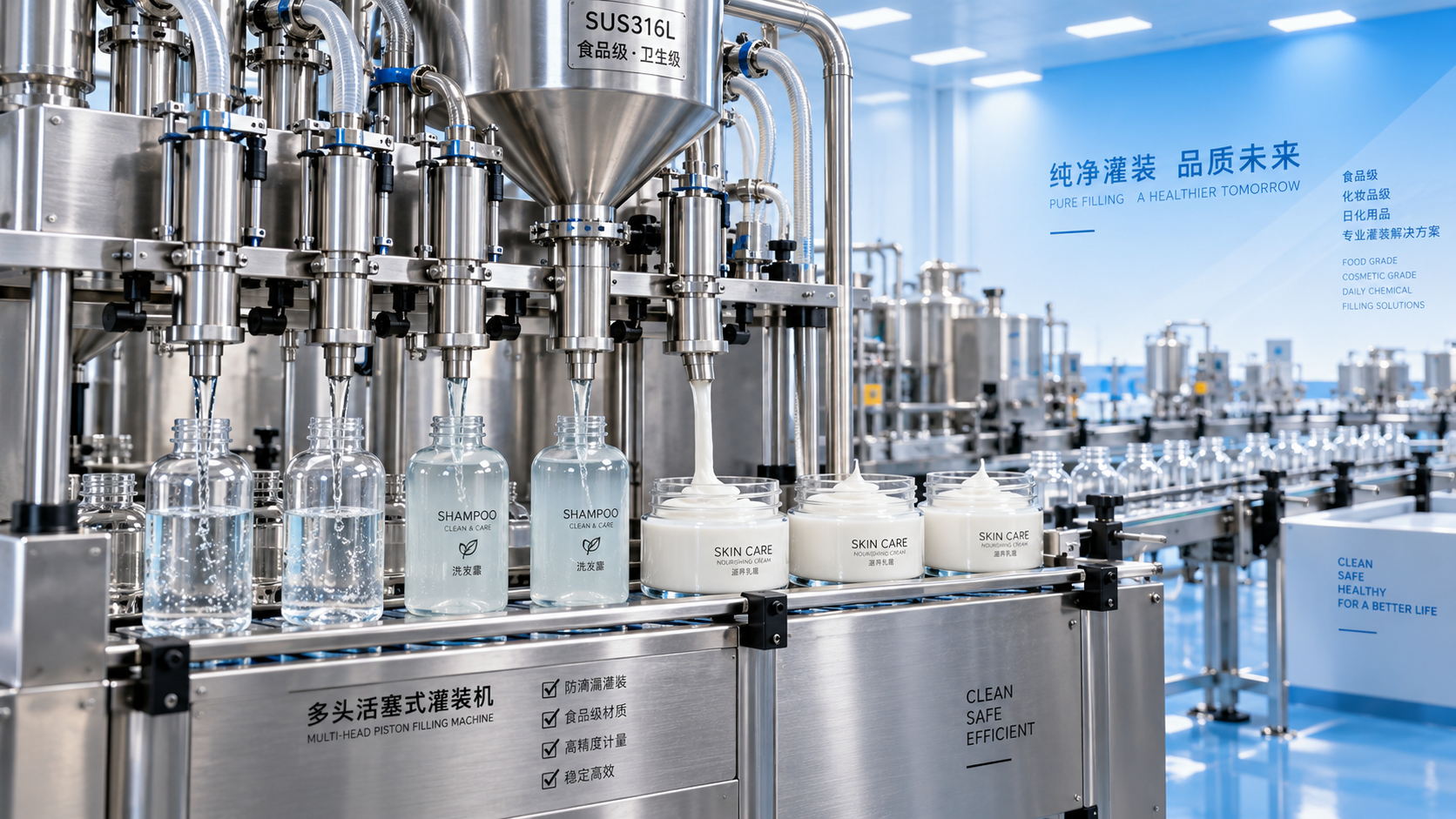
Liquid Filling Machine Types and Technologies Compared: Which One Fits Your Product?
Liquid filling technologies are not interchangeable — each is designed for a specific type of material. The main categories include atmospheric pressure, negative pressure, isobaric, and pressure filling, plus specialized solutions such as defoaming filling for daily chemicals, electronic quantitative filling for liquor, and low-temperature low-oxygen filling for beer. Choosing the right type depends on whether your product is a still beverage, a fruit juice reagent, a carbonated drink, a viscous sauce, a foaming personal care product, or a spirit.1. Atmospheric pressure vs negative pressure filling
Atmospheric pressure filling is suitable for still beverages, where the liquid flows at normal pressure without the need for gas handling. Negative pressure filling is commonly used for fruit juice reagents. Both belong to the broader family of alcohol filling equipment, which also includes isobaric and pressure filling to cover the full range of material types.2. Isobaric vs pressure filling
Isobaric filling is designed for carbonated drinks, maintaining equalized pressure to protect the gas content during filling. Pressure filling is suited to viscous sauces, where additional pressure helps move thick liquids reliably into containers. These two complete the four-category alcohol filling equipment range: atmospheric pressure, negative pressure, isobaric, and pressure.3. Defoaming filling for daily chemicals
Foaming materials such as shampoo and shower gel create a specific challenge: foam interferes with filling metering, causing uneven fill volume and material overflow and waste. Daily chemical filling machines equipped with defoaming filling technology solve this problem, ensuring accurate metering for easily foaming materials.4. Electronic quantitative filling for liquor
Liquor electronic quantitative filling machines use a measuring cup-type quantitative structure with stepless capacity adjustment from 125 to 750 ml. They adapt to bottle types from 150 to 350 mm, with custom sizes available beyond the standard range. Material-contact parts are made of 304 stainless steel and imported silicone, and the machine includes protective structures such as bottle jam stop and soft start to reduce glass breakage.5. Beer filling: low-temperature, low-oxygen, clean
Beer filling machines meet the requirements of low-temperature, low-oxygen, and clean filling, and are equipped with standardized sterilization processes. This standardization stabilizes the quality of finished beverages and is verified in numerous production lines.Comparison summary
The table below summarizes which filling technology fits which material:
6. Single machine or fully automated line?
A single filling machine handles one step, but modern production often needs more. Tuodao offers a complete range — filling machines, bottle brushing machines, bottle rinsing machines, sealing machines, corking machines, heat shrink machines, dryers, conveyors, carton sealing machines, and filters — which can be customized and linked with conveyors into fully automated filling production lines. For products involving water, reverse osmosis pure water, ultrafiltration, fully automatic soft water, and high-purity water equipment complete the picture from purification to filling.Conclusion
There is no single 'best' filling machine — the right choice depends on your material. Match the technology to your product type, verify metering accuracy and materials, and consider whether a complete, one-stop production line will serve your capacity better than a standalone machine.FAQ
Which filling type suits carbonated drinks?A. Isobaric filling, which maintains equalized pressure to protect the carbonation during filling.How does defoaming filling help daily chemical producers?A. It solves the metering problem caused by foam when filling easily foaming materials such as shampoo and shower gel.Does Tuodao provide the supporting machines for a full line?A. Yes. It provides bottle brushing, bottle rinsing, sealing, corking, heat shrink, dryers, conveyors, carton sealing machines, and filters, which can be linked into automated filling production lines.
Liquid Filling Machine Types and Technologies Compared: Which One Fits Your Product?
Liquid filling technologies are not interchangeable — each is designed for a specific type of material. The main categories include atmospheric pressure, negative pressure, isobaric, and pressure filling, plus specialized solutions such as defoaming filling for daily chemicals, electronic quantitative filling for liquor, and low-temperature low-oxygen filling for beer. Choosing the right type depends on whether your product is a still beverage, a fruit juice reagent, a carbonated drink, a viscous sauce, a foaming personal care product, or a spirit.
1. Atmospheric pressure vs negative pressure filling
Atmospheric pressure filling is suitable for still beverages, where the liquid flows at normal pressure without the need for gas handling. Negative pressure filling is commonly used for fruit juice reagents. Both belong to the broader family of alcohol filling equipment, which also includes isobaric and pressure filling to cover the full range of material types.
2. Isobaric vs pressure filling
Isobaric filling is designed for carbonated drinks, maintaining equalized pressure to protect the gas content during filling. Pressure filling is suited to viscous sauces, where additional pressure helps move thick liquids reliably into containers. These two complete the four-category alcohol filling equipment range: atmospheric pressure, negative pressure, isobaric, and pressure.
3. Defoaming filling for daily chemicals
Foaming materials such as shampoo and shower gel create a specific challenge: foam interferes with filling metering, causing uneven fill volume and material overflow and waste. Daily chemical filling machines equipped with defoaming filling technology solve this problem, ensuring accurate metering for easily foaming materials.
4. Electronic quantitative filling for liquor
Liquor electronic quantitative filling machines use a measuring cup-type quantitative structure with stepless capacity adjustment from 125 to 750 ml. They adapt to bottle types from 150 to 350 mm, with custom sizes available beyond the standard range. Material-contact parts are made of 304 stainless steel and imported silicone, and the machine includes protective structures such as bottle jam stop and soft start to reduce glass breakage.
5. Beer filling: low-temperature, low-oxygen, clean
Beer filling machines meet the requirements of low-temperature, low-oxygen, and clean filling, and are equipped with standardized sterilization processes. This standardization stabilizes the quality of finished beverages and is verified in numerous production lines.
Comparison summary
The table below summarizes which filling technology fits which material:
6. Single machine or fully automated line?
A single filling machine handles one step, but modern production often needs more. Tuodao offers a complete range — filling machines, bottle brushing machines, bottle rinsing machines, sealing machines, corking machines, heat shrink machines, dryers, conveyors, carton sealing machines, and filters — which can be customized and linked with conveyors into fully automated filling production lines. For products involving water, reverse osmosis pure water, ultrafiltration, fully automatic soft water, and high-purity water equipment complete the picture from purification to filling.
Conclusion
There is no single 'best' filling machine — the right choice depends on your material. Match the technology to your product type, verify metering accuracy and materials, and consider whether a complete, one-stop production line will serve your capacity better than a standalone machine.
FAQ
Which filling type suits carbonated drinks?
A. Isobaric filling, which maintains equalized pressure to protect the carbonation during filling.
How does defoaming filling help daily chemical producers?
A. It solves the metering problem caused by foam when filling easily foaming materials such as shampoo and shower gel.
Does Tuodao provide the supporting machines for a full line?
A. Yes. It provides bottle brushing, bottle rinsing, sealing, corking, heat shrink, dryers, conveyors, carton sealing machines, and filters, which can be linked into automated filling production lines.
Previous page:Already the first
Next page:Already the last
Shandong Tuodao Intelligent Equipment Co., Ltd.
Thank you very much for writing to us. Please leave your message and contact information, we will reply to you within 24 hours.